Summary: The Parker F11/F12 is a bent-axis, fixed-displacement hydraulic motor/pump unit. Depending on the application, it can operate as either a hydraulic motor or a hydraulic pump. When running as a pump, the direction of shaft rotation determines which port serves as the inlet (suction) and which serves as the outlet (pressure). The correct port connections depend on the direction of rotation when viewed from the shaft end. This article explains how to properly identify the ports and confirm the correct setup before installation.
Applies to: Anyone installing or using Parker F11/F12 units as hydraulic pumps, particularly when identifying the suction and pressure ports on units with two main ports of the same size.
FINAL ACCEPTANCE CRITERIA
- Identify the inlet and outlet ports on a Parker F11/F12 unit operating as a pump.
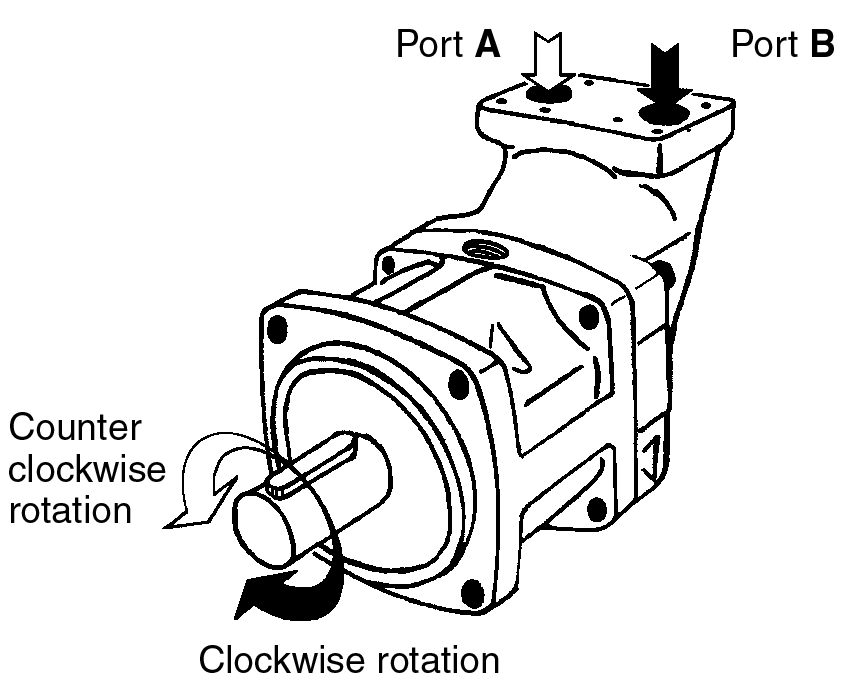
- Identify Port B as the inlet and Port A as the outlet when the shaft rotates clockwise, viewed from the shaft end.
- Identify Port A as the inlet and Port B as the outlet when the shaft rotates counterclockwise, viewed from the shaft end.
- Understand that the two main ports can be the same size while serving different functions according to the direction of rotation.
- Confirm the A and B port markings and the direction of rotation before connecting the unit.
- Connect the case drain to the tank and verify that the selected port is designated as a case drain port.
TECHNICAL BULLETIN
This bulletin establishes the proper direction of rotation and port identification when operating Parker F11/F12 motors as pumps.