

Hi everyone! Last week we had a video on an old Denison Apex PV06. These old hydraulic pumps were heavily overbuilt and often ran for years with very little servicing. The video also shows the challenges of repairing obsolete hydraulic equipment when many of the original parts are no longer available. That sparked up a conversation with Fraser to discuss the changes hes experienced with hydraulics over the years.
Video: This Old Machine Still Works! - Repairing a Rare APEX PV06 Pump
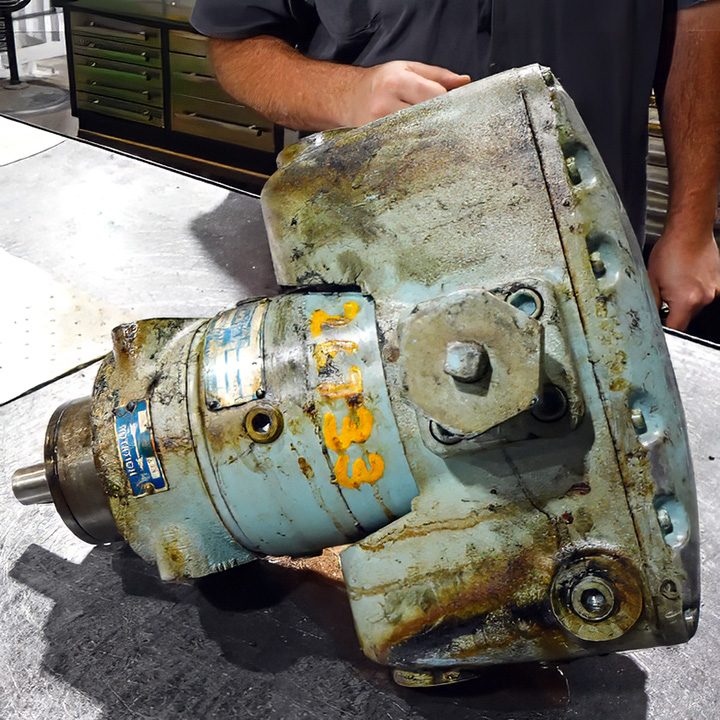
Tomas: Hi Fraser, in the video about the Apex PV06 pump, we discussed how hydraulics have changed throughout the years. If you had to choose just 3 major areas, where would you say hydraulics have advanced the most in the last 30 or so years?
Fraser: Manufacturing - costs have come down as more of the manufacturing processes become automated, and designed for automated machiningKnowledge - reduction of knowledge to install and operate. Old hydraulics had lots of handwheels for making adjustments. Now they require allen keys and you break tamper evidence paint. People don't have the same knowledge to make adjustments so manufacturers just say "Don't touch". Less serviceability - More replacing of units rather than servicing them.
Tomas: This seems to be a theme across industries, seen in trending topics like "planned obsolescence" and "right to repair" laws. Generally, it is viewed as a negative, however, do you see any positives with this move in Hydraulics specifically? (faster to replace than repair, fewer specialized mechanics needed, faster service lead times, etc.)?
-
Colorado requires agricultural equipment manufacturers to provide resources for individuals to repair their own agricultural equipment.
-
California requires manufacturers to provide the means to diagnose, maintain or repair for seven years for products with a price point more than $100; three years for products under $100.
Fraser: When I say replace or repair, I'm just referring to the components inside the machine. Not the machine as a whole. There are lots of old machines that they are not going to scrap because of problems repairing a hydraulic component. They are going to get it fixed no matter how hard it is. And nobody is saying you are not allowed to repair. For instance in the agriculture industry, John Deere was making them sign contracts saying they could not repair it. What is happening in the hydraulics industry is that it is just not economical.
Tomas: Do you see this increase in tamper proof designs as a good thing? (Less things for the end-user to care about, and less likely for accidental damage?) Or do you think hydraulic components should go back to having more easily accessible adjustments?
Fraser: Being able to tweak and get the most out of their machines is the best. I don't think hydraulics should be dumbed down.
Tomas: Agreed--I think dumbing things down has bad consequences for curiosity and knowledge in general.
Fraser: Everyone has an obligation to learn the equipment that they are responsible for. Can you imagine if ignorance was an acceptable excuse?
Tomas: No I cannot. Going back to PV06, "NPT ports". How are these threads different from the ones we learned about in the threaded fasteners post?
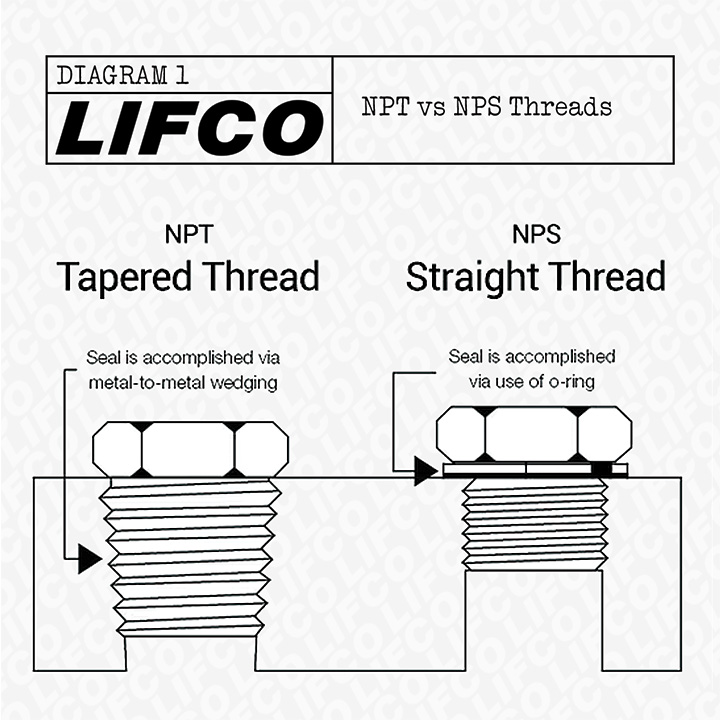
Fraser: Connections are a weakness of mine. I think I sit behind a desk too much, when you need practice, practice, and more practice for connections like these. But in general, NPT is falling out of favor in the hydraulics world. One of the major issues is that because it is tapered, it does not have as much repeatability. Remember, threads need to be torqued to a certain amount where there is sufficient strain on the threads where they want to return to their original shape (elastic deformation) but not too much where it becomes plastic deformation. I have never seen someone use a torque wrench on an NPT fitting. I'm sure it should be best practice, but I've never actually seen it! So what ends up happening is it gets overtightened inevitably, and then ruined. It's almost as if NPT connections are single use. Much better to go with ORB.
Tomas: What other changes in industry trends have you observed over the last 15 years or so?
Fraser: A lot of screws for fastening controls and thru drive adapter plates are being switched to ISO/metric. The main connections are staying SAE but the internal components are going metric. Also DIN fluid connections are being phased out. They are very similar to ISO and it is only certain sizes that have a difference. I don't know the history for sure, but one probably borrowed from the other because it was well engineered and entrenched.
Tomas: Could this create compatibility issues for units that might not have been repaired or inspected in years?
Fraser: No they are mostly auxiliary or internal threads. Most customers don't notice it. There are a few threaded pressure valves like the R4V that were NPT and now discontinued. Those require a complete rework of piping, which can be very difficult for maintenance staff to replace.
Tomas: Looking forward to the next 15 years, what major technologies or design-tendencies do you see changing in Hydraulics as a whole?
Fraser: More consolidation of product lines, particularly as smaller manufacturers get swallowed up by larger companies. Less hydraulic pilot operated pumps, motors, and valves, and more electronic piloted. Smaller, less used standards getting phased out and replaced with more popular standards.